
Tongue and lip ties for kids & teens
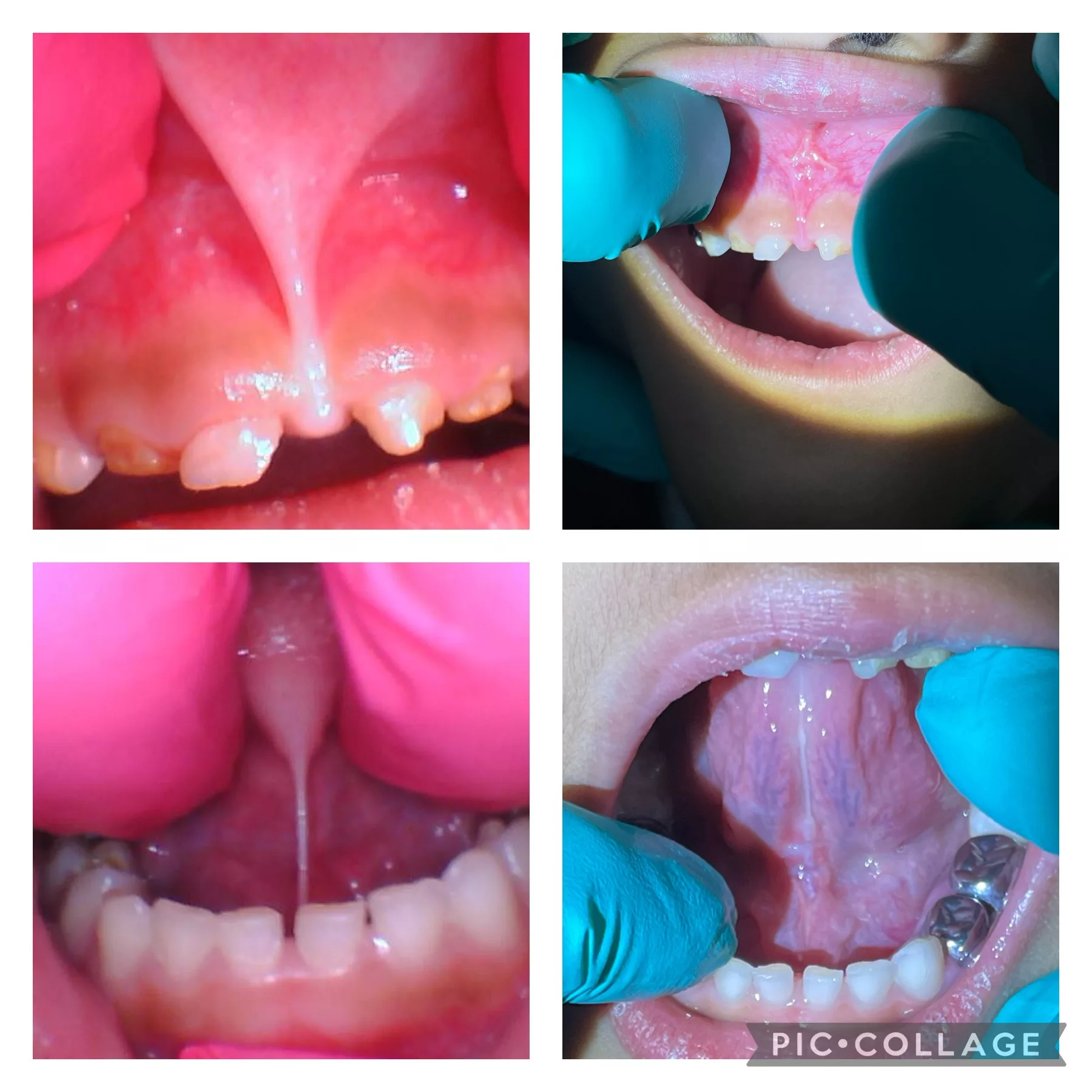
When tongue function is restricted by a tongue tie, everyday tasks can be affected. The function and position of the tongue is important in feeding, speaking, during sleep and breathing. These are some of the signs/symptoms that your child may have a tongue tie:
Feeding
- Choking, gagging or coughing when transitioning to eating solids
- Spitting food out
- Slow eating
- Picky eating
- Pocketing food in cheeks like a chipmunk
- History of breastfeeding difficulty, difficulty with bottles, unable to take a pacifier
Sleep
-
- Restless sleep
- Irritable when awake
- Sleeping with an open mouth/ snoring
- Sleep apnea
- Teeth grinding
- Teeth clenching
- Bed wetting
- Sleep talking/sleep walking
- Tired during the day
Speech
- Delayed speech
- Speech sound issues
- Soft speaking or mumbling
- Lisp
- Tongue thrust swallow
- Difficulty understanding the child’s speech
- Child in speech therapy but not progressing as expected
Breathing
- Mouth breathing
- Open mouth posture
- Noisy breathing
- Low tongue posture
What’s the Connection Between Tongue Tie and Breathing?
The tongue should be suctioned to the roof of the mouth at all times except while speaking and eating. This closes off the airway through the mouth and encourages nasal breathing. Nasal breathing allows for proper air filtration and more efficient oxygen delivery throughout the body. A child with a tongue tie may have a low tongue resting posture which may encourage the mouth to hang open most of the time. This may lead to habitual mouth breathing. When a tongue tie is released, in conjunction with myofunctional therapy (teaching the muscles in the mouth how to function properly), the tongue can assume proper position on the roof of the mouth leading to more efficient nasal breathing.
If you think your child may have a tie:
You can book a consultation with one of our specialized pediatric dentists who have extensive training and continuing education in the field of tongue ties, lip ties and airway.
What to expect during the consultation
1. A thorough history taking, going through a detailed list of questions to help us determine the root causes of the issues
2. A full intra- and extra-oral examination looking at the child’s face, jaw position, mouth, teeth and tongue/lip position and function
3. A comprehensive description of our observations
4. A thorough discussion of your options, going through the risks and benefits of each, focussing on the ideal timing of the release if indicated for your child’s particular situation
5. If a release is recommended, we will discuss the procedure with you in detail, including all pre- and post-operative instructions as well as a discussion of all costs involved
6. Sedation: Some kids may benefit from sedation during their procedure. We offer all levels of sedation from nitrous oxide to full general anesthetic (treatment asleep) and a discussion of each modalities that applies to your child will be presented to you during your consultation.
Assessment and treatment with other healthcare professionals (like speech pathologists, myofunctional therapists, manual therapists, etc.) may be recommended in conjunction with our treatment to maximize the benefits of a release and ensure the most ideal healing. For example, if we believe that a tongue tie may be causing a speech issue, we will usually recommend that the child be assessed by a speech pathologist who specializes in tongue tie prior to the procedure.
We also require myofunctional therapy (teaching the muscles in the mouth how to function properly) before and after the release in order to ensure the most optimal outcome. This will be discussed with you in more detail during your consultation and we will provide you with a list of skilled providers that we work with regularly.
What to expect during the tongue/lip tie release
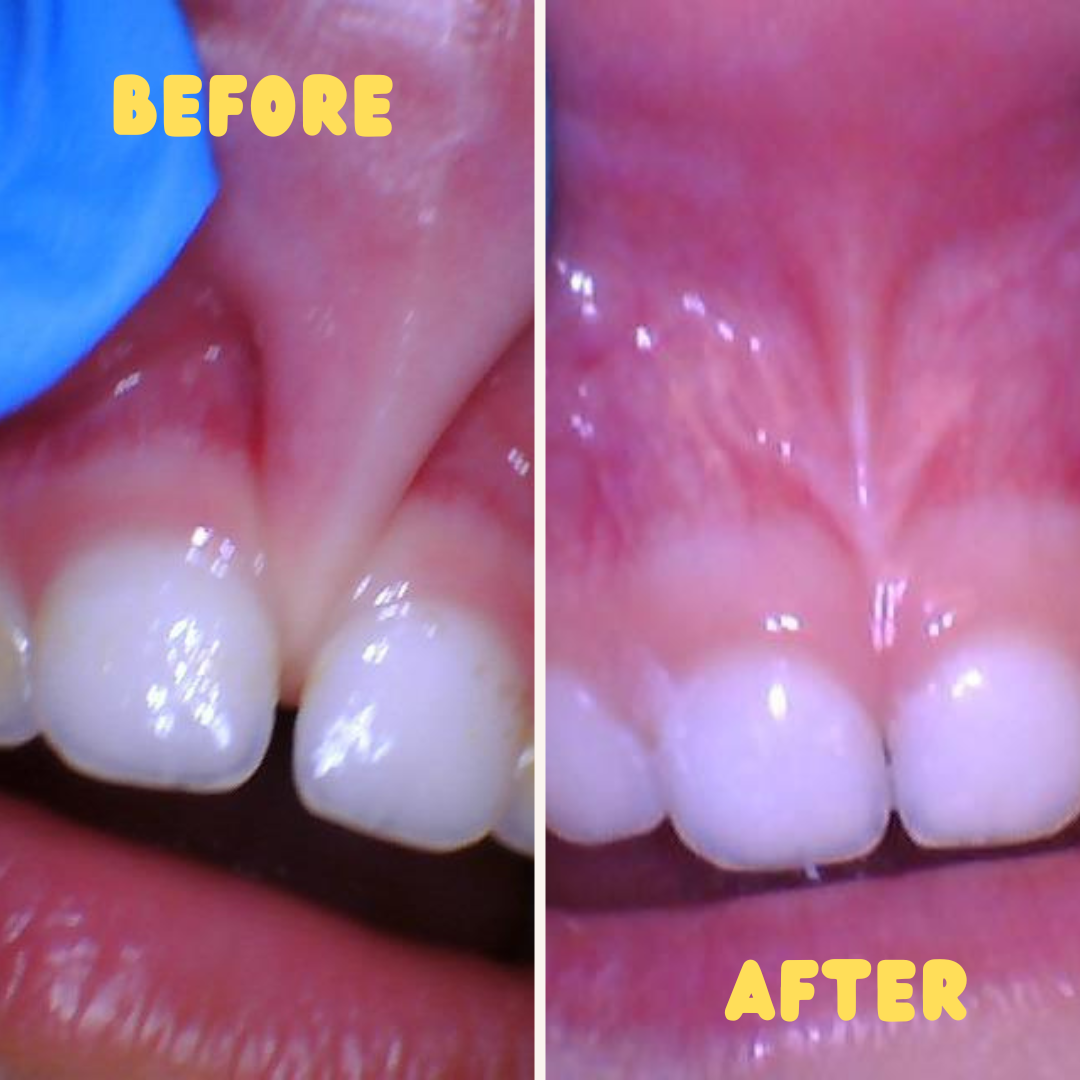
1. Pre-operative intraoral photos
2. Topical anesthesia followed by local anesthesia injection (freezing)
3. Using a laser, we will fully release the tie along with any restrictive fibers
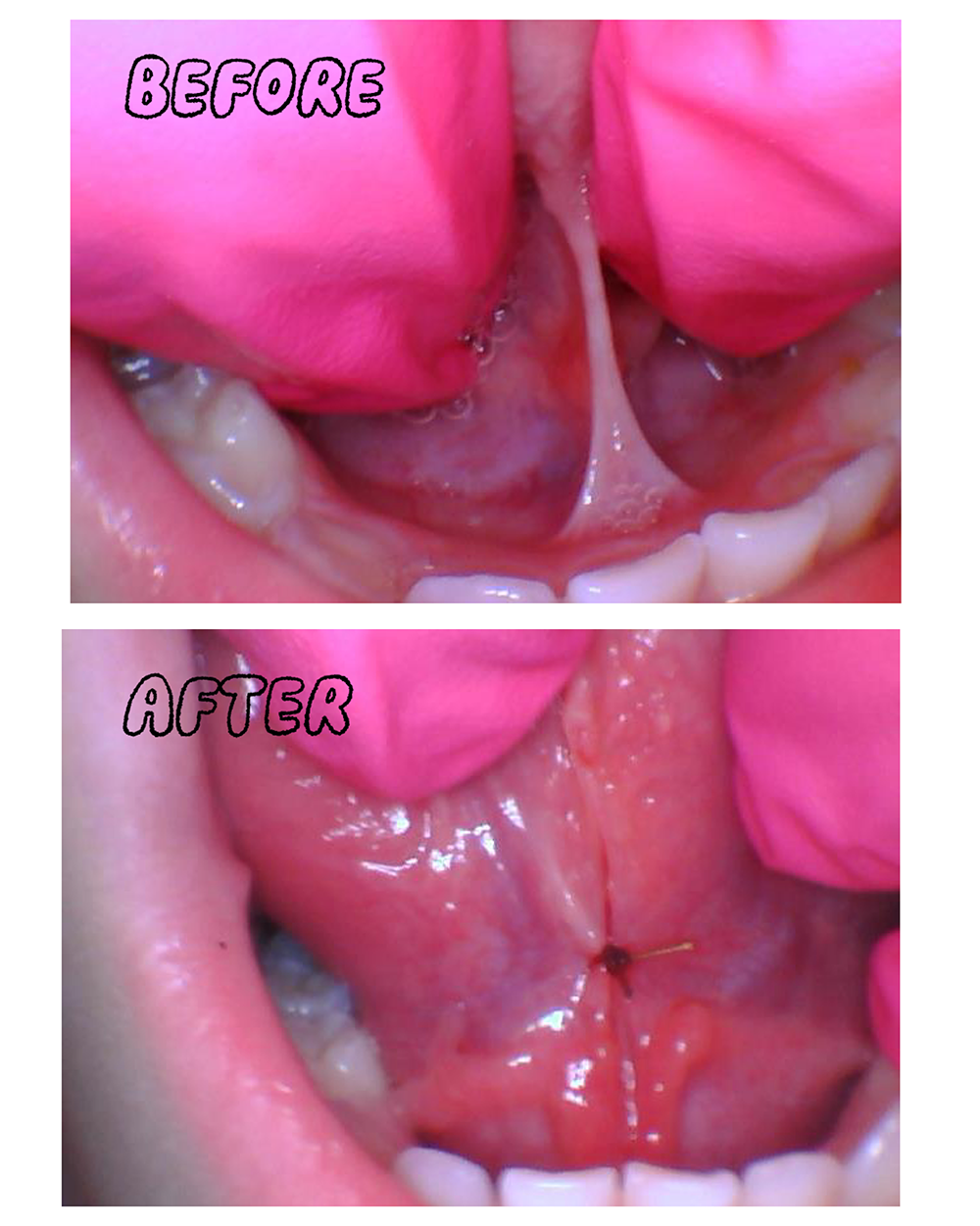
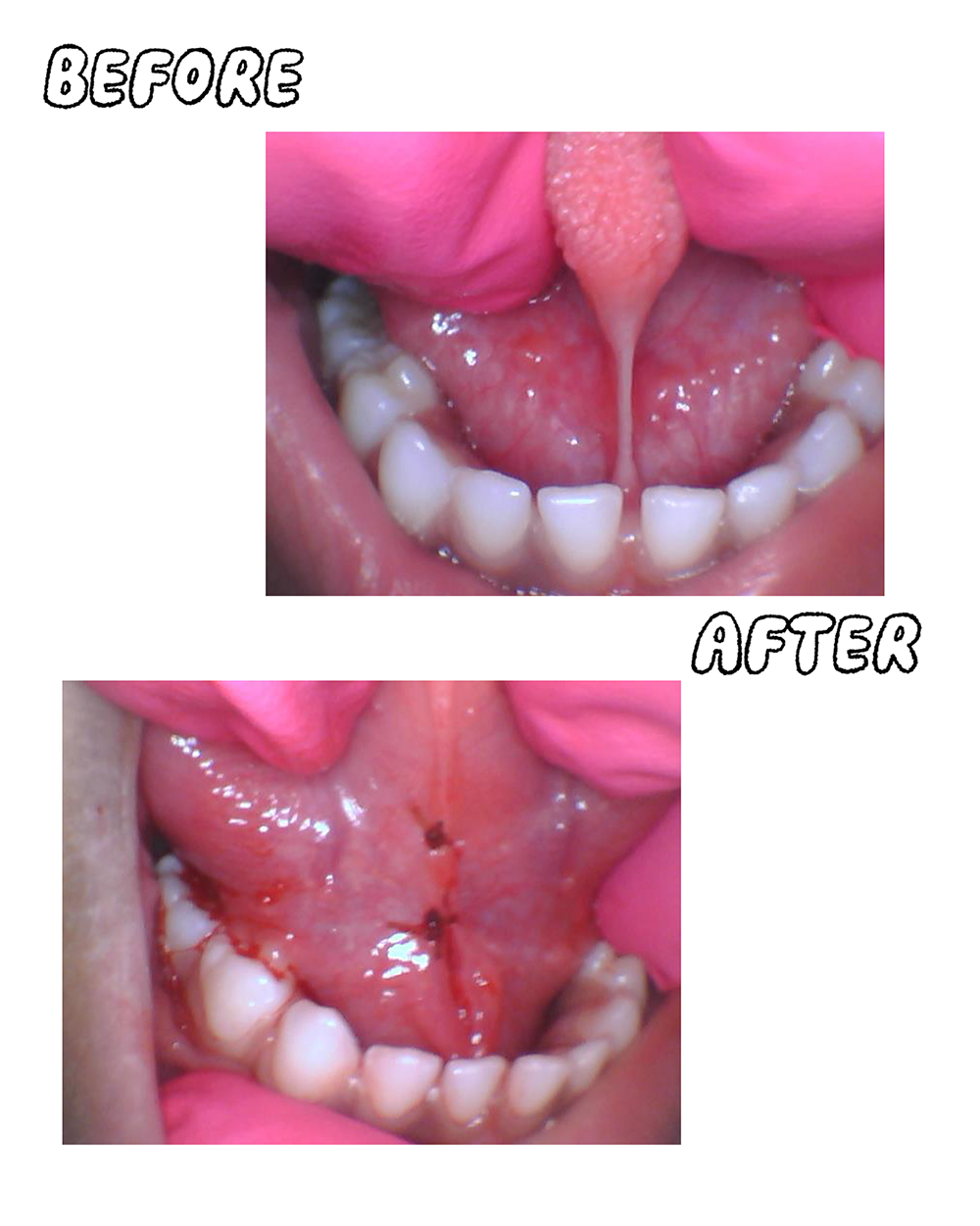
4. Sutures (stitches) will be placed following most of our tongue tie releases to allow the wound to heal in the proper position
5. Post operative instructions including proper post-operative stretching technique will be discussed
After the procedure
Your child will not feel pain for the first 2-3 hours after the procedure because the area will be frozen. It is normal to feel some soreness under the tongue for about 48 hours after the procedure.
Tylenol/Advil may be used after the procedure to control the discomfort.
In the case of a tongue tie release, it is very important to encourage the tongue to move as much as possible in the 2-3 weeks after the procedure. Kids with tongue ties often have their tongues in a low resting position most of the time. In order to achieve the most optimal healing, we want encourage the kids to move their tongue and have their tongues resting on the roof of their mouths. Because this does not come naturally to most kids, pre-release and post release therapy with a trained myofunctional therapist is very important. This will be discussed with you in more detail during your consultation.
No Result
Any open wound will naturally contract and heal, and this results in the formation of new tissue and frenum, or "reattachment". After a frenectomy, the goal is to prevent as much reattachment as possible so that we can maintain good mobility and function of the tongue. The goal is to have the area heal slowly, and for the new frenum that forms to be more mobile and flexible than before, allowing for ideal function. We place sutures after a tongue tie release to allow the wound edges to heal in an ideal position and the pre and post operative exercises are really key to achieving the best possible result.
Frequently Asked Questions
No Result
We very frequently encounter families who have been told by multiple healthcare providers that their child does not have a tie. In order to properly assess and diagnose a tongue tie, a thorough and functional examination should be provided by a professional specializing in tongue-/lip-ties. It’s important to seek a second opinion if you/your child has symptoms consistent with a tie even if you’ve been told that everything is fine.
We LOVE our Light Scalpel Co2 laser!!! It allows for a very efficient release and it akso cauterizes the blood vessels so that we have a dry field. This is important as we want to ensure release of each and every restrictive fiber for maximal mobility post operatively. In our experience it also reduces post-operative discomfort and allows for better healing as compared to a diode laser.
We have many patients in our practice who have had tongue ties released elsewhere who still have tongue ties. Unfortunately, some providers only release the front (anterior) part of the tie but do not release the back (posterior) part of the tie and this can result in persistent symptoms of tongue tie. In some cases tongue ties can heal back together without the proper post operative stretching. After a release there is always going to be new tissue (frenum) that forms in the area of the tie and without proper post operative care, the new tissue can be just as tight as the original tie was.
Because we use a laser, it cauterizes the tissue in the area and normally there is very little to no bleeding during and after the procedure.
Fortunately, this is a relatively simple procedure that involves little risk. However, should you need to reach us, you can call us at any time during office hours at 416-825-1818. After hours, please call the emergency phone number listed on our voicemail.
We will inject local anesthetic (freezing)prior to the procedure. This does pinch slightly but it takes a couple of seconds and then the area will be numb and your child will not feel anything during the procedure.
After the procedure we expect the most discomfort in the 48 hours following the procedure. Tylenol or Advil can be used for pain management.
Many children are able to have their procedure done awake. Some kids may benefit from some laughing gas or a sedative medication to help them relax but still remain awake. Other kids, especially young children, may benefit from a very brief anesthetic (typically 10-15 minutes total) in order to ensure a full release along with stitches. All options that apply to your child will be discussed with you during your consultation.
If you have dental insurance benefits for your child, some or all of the fees may be covered. Everyone’s insurance coverage is different, so please contact our admin squad at 416-825-1818 and we will be happy to help you assist you.
It is expected that there will be a white wet scab as the wound heals. This is totally normal! If you are concerned about anything that seems unusual, you can call us anytime!
Yes! Most kids are able to go to school the next day. Some kids may require an extra day off but most can return to normal activity the following day.
Click on the age group below to learn more



Click to book a visit
Click to refer a patient